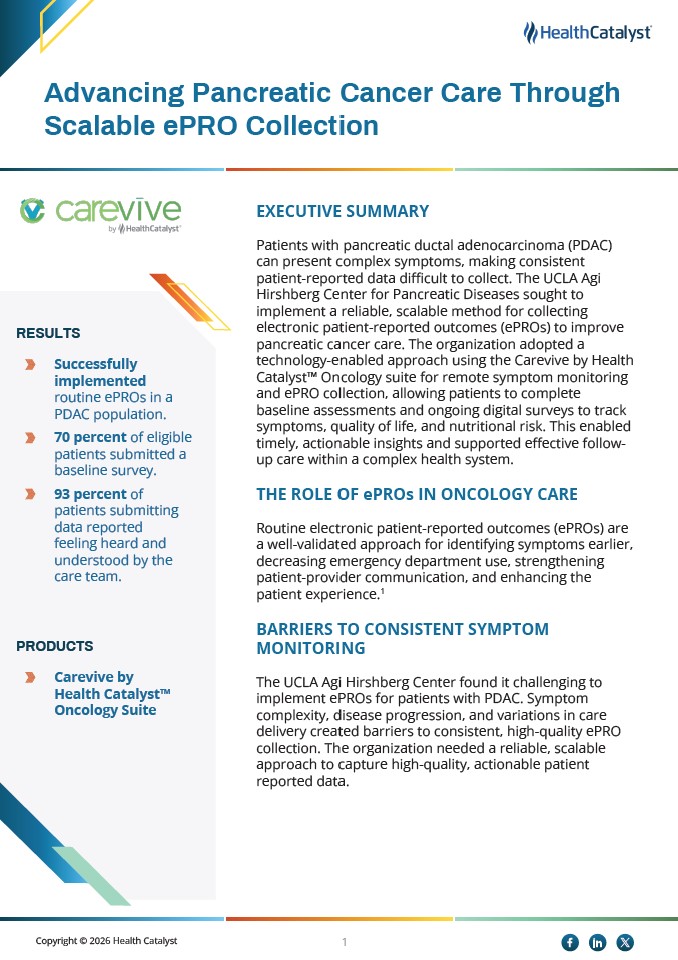
Patients with pancreatic ductal adenocarcinoma (PDAC) can present complex symptoms, making consistent patient-reported data difficult to collect. The UCLA Agi Hirshberg Center for Pancreatic Diseases sought to implement a reliable, scalable method for collecting electronic patient-reported outcomes (ePROs) to improve pancreatic cancer care. The organization adopted a technology-enabled approach using the Carevive by Health Catalyst™ Oncology suite for remote symptom monitoring and ePRO collection, allowing patients to complete baseline assessments and ongoing digital surveys to track symptoms, quality of life, and nutritional risk. This enabled timely, actionable insights and supported effective follow-up care within a complex health system.
Routine electronic patient-reported outcomes (ePROs) are a well-validated approach for identifying symptoms earlier, decreasing emergency department use, strengthening patient-provider communication, and enhancing the patient experience.1
The UCLA Agi Hirshberg Center found it challenging to implement ePROs for patients with PDAC. Symptom complexity, disease progression, and variations in care delivery created barriers to consistent, high-quality ePRO collection. The organization needed a reliable, scalable approach to capture high-quality, actionable patient reported data.
To collect ePROs for patients with PDAC and deliver high-quality pancreatic care, UCLA Agi Hirshberg Center implemented a navigator-facilitated model of ePRO-informed pancreatic cancer care, using the Carevive by Health Catalyst Oncology suite for remote symptom monitoring and ePRO collection.
Patients receiving ongoing PDAC care completed baseline ePRO surveys and were invited to enroll in the remote symptom monitoring program using Carevive PROmpt®, a mobile application that enables patients to interact directly with their care teams and to receive and complete ePRO surveys.
Baseline surveys captured symptom burden using the National Cancer Institute’s Patient-Reported Outcomes version of the Common Terminology Criteria for Adverse Events (PRO-CTCAE®) and health-related quality of life using EORTC QLQ Core Questionnaire. Enrolled patients received the Pancreatic Supplement Survey every two months, which included three instruments: Feeling Heard and Understood, Pancreatic Exocrine Insufficiency, and the Malnutrition Screening Tool (MST). A positive MST screen with a score greater than two triggered an alert, which was sent directly to the navigator for review and follow-up.
Dedicated implementation support and weekly meetings throughout the rollout process were essential to the successful launch of the remote symptom monitoring program and ePRO collection, and its adoption as a consistent part of the care experience for patients with PDAC.
The UCLA Agi Hirshberg Center successfully implemented routine ePROs in a PDAC population, demonstrating that a scalable, technology-enabled approach can function effectively within a complex health system. Results include:
“The Carevive platform gave us the digital infrastructure we needed to make ePROs a routine part of pancreatic cancer care. For the first time, symptom, quality-of-life, and nutrition risk data are consistently captured between visits and available to help inform decision-making and improve care quality.”
- Emily Martin, MD, MS
The UCLA Agi Hirshberg Center is committed to collecting ePROs in the PDAC population to improve care quality and plans to scale the program to reach more patients. The organization will continue to intervene to improve symptom burden, health-related quality of life, and nutritional needs, and measure the impact on patient experience and clinical outcomes.