The labor budget miss used to show up 8 days after the pay period closes, once the shift that caused it was long gone. Now the gap shows up before the shift starts, with a fix already attached.
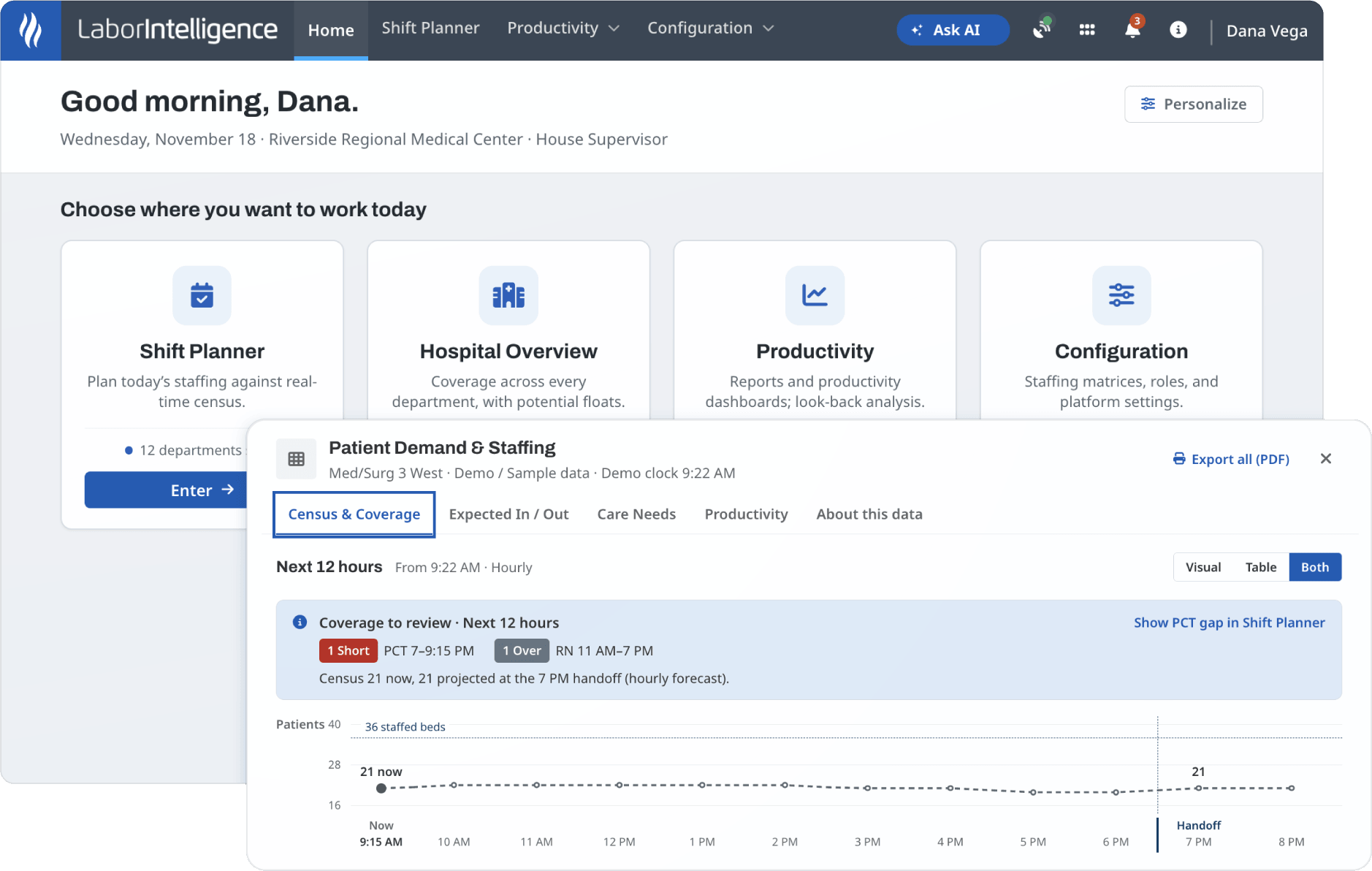
Gain actionable staffing insights from day one, with the visibility to make more informed labor decisions.
Why now?
Labor is the largest expense on the income statement, and one of the most impactful levers leadership can pull to improve financial performance.
Costs keep climbing 3 to 5% a year, right as new policy changes squeeze the revenue that used to absorb it. Recruiting won't fix this one either. The shortage behind it is structural, a decade in the making. For the next ten years, the only lever that works is getting more out of the team already on the payroll.
From your seat
It's that the data arrives after the decision's already been made. Here's how that closes, seat by seat.

The problem
The budget miss surfaces 8 days after the pay period closes. By then, retrospective reporting can explain the overage, not prevent it.

The payoff
See the gap forming before the money's spent.

The problem
Nursing leaders struggle to balance safe staffing with productivity targets, without clear visibility into changing patient demand and future staffing needs.
The payoff
Forecast patient staffing needs to proactively align resources with clinical demand.

The problem
Staffing decisions have to happen in real time across sites, but the tools only look backward, so every site solves its own problem and the system-level opportunity disappears.
The payoff
One decision layer, system-wide.

The problem
Frontline managers must make time-sensitive staffing decisions with patient, staffing, and scheduling information scattered across multiple systems.
The payoff
See patient information along with staffing needs and gaps in one place, with actionable recommendations.
What it does
Labor Intelligence helps healthcare organizations make smarter staffing decisions with timely, actionable insights into labor costs, productivity, and staffing needs. By combining system-wide visibility with AI-powered forecasts, recommendations, and self-service analytics, it helps teams anticipate staffing gaps, match resources to patient demand, control labor costs, and track performance against budget, all without relying on manual analysis.

A pushed, plain-language briefing showing the staffing gap for the hours and shift ahead.
Dashboard highlights
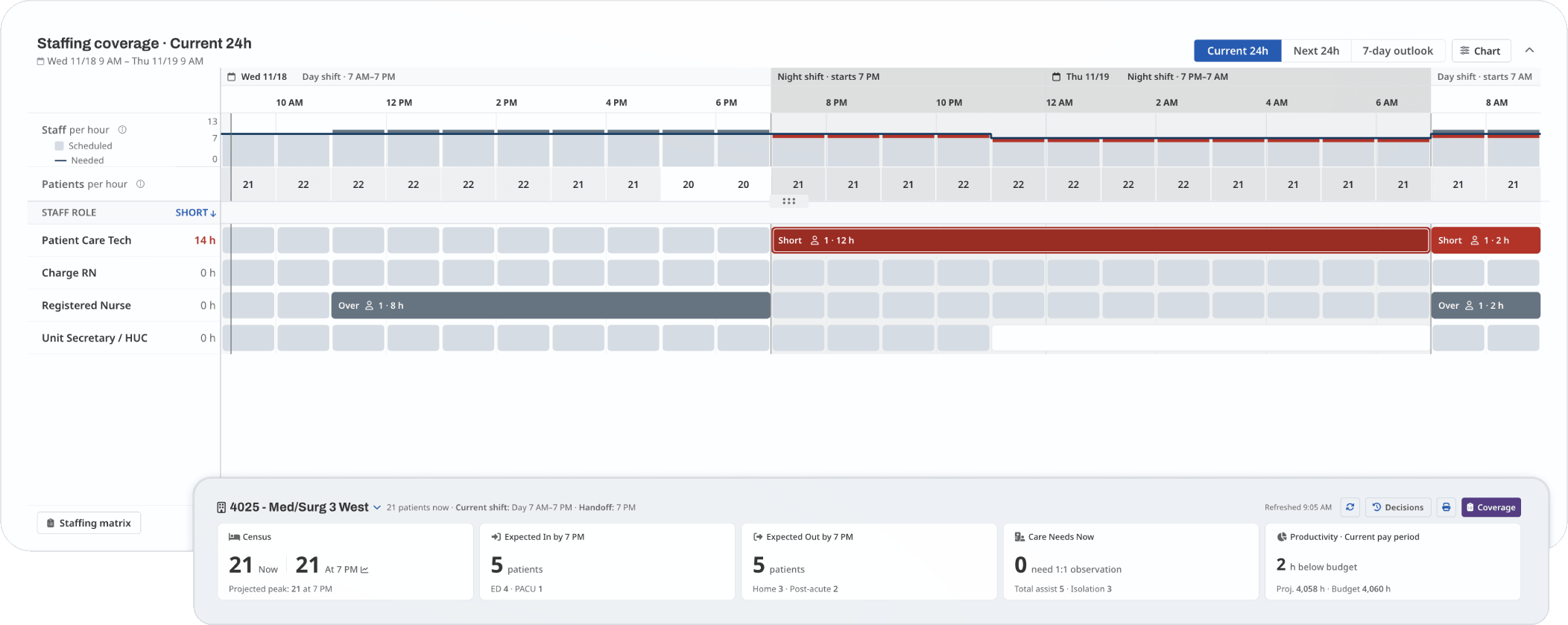
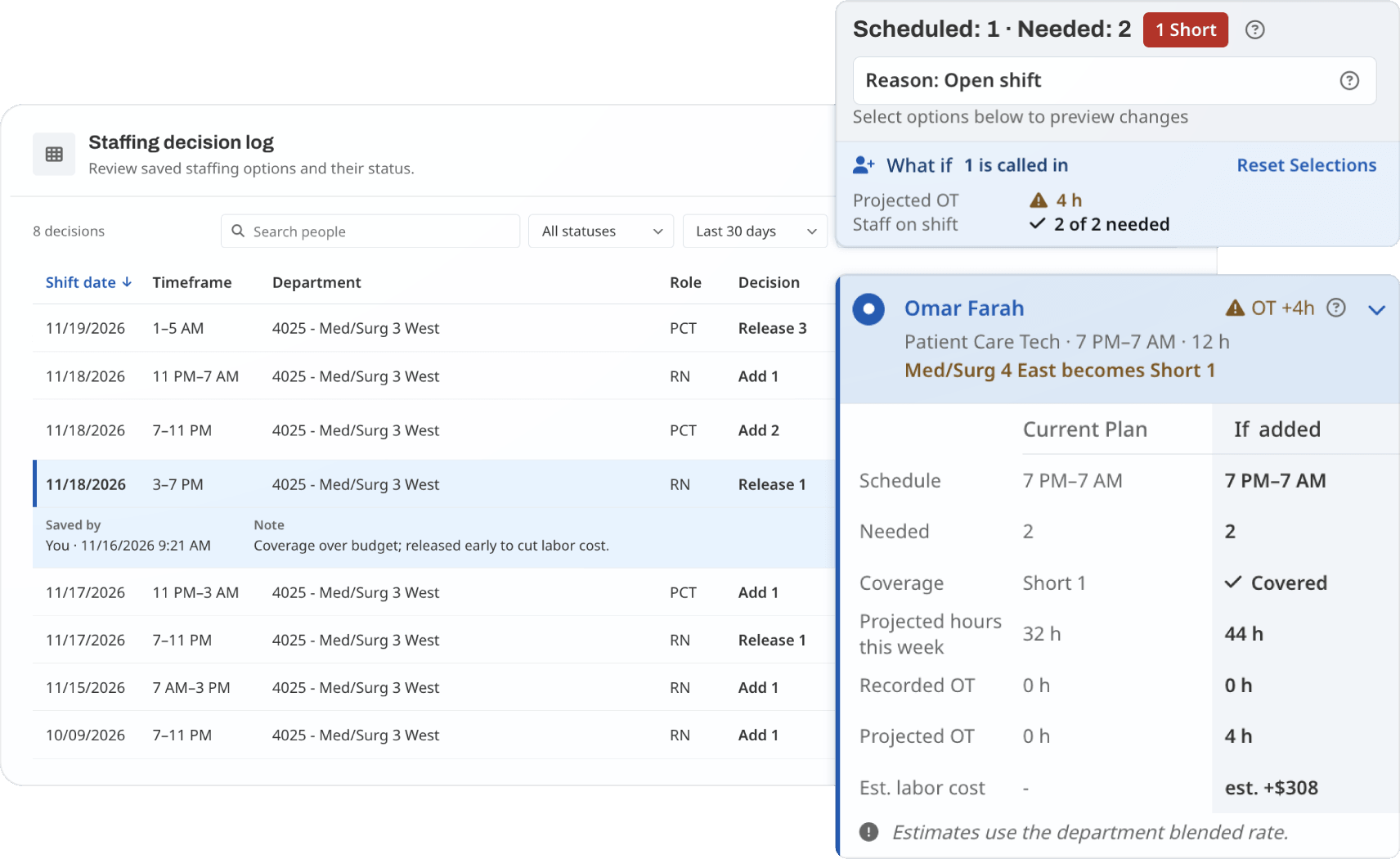

Ranked, lowest-cost options to close the gap.
Dashboard highlights

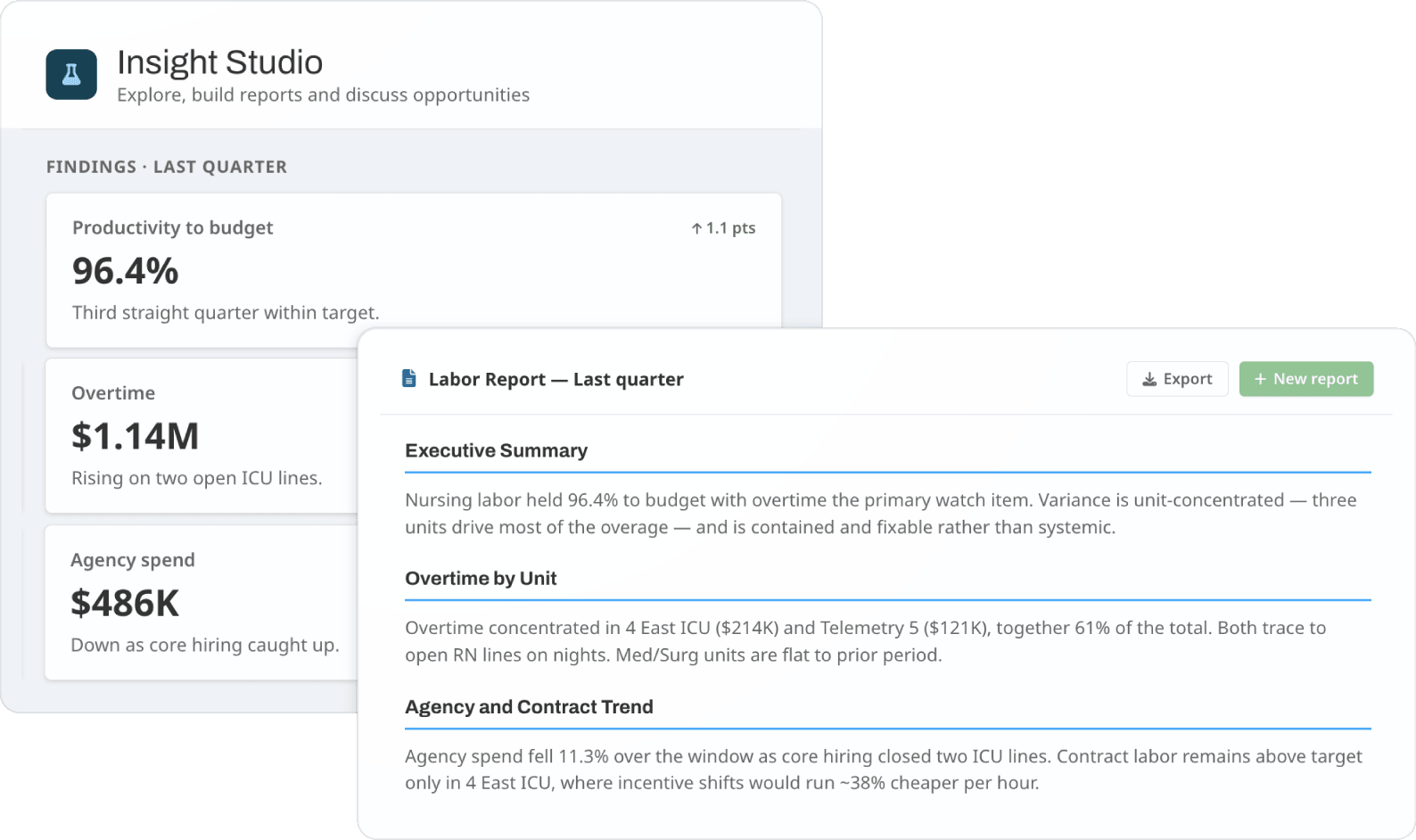
Self-service exploration of variance by entity, department, and driver.
Dashboard highlights
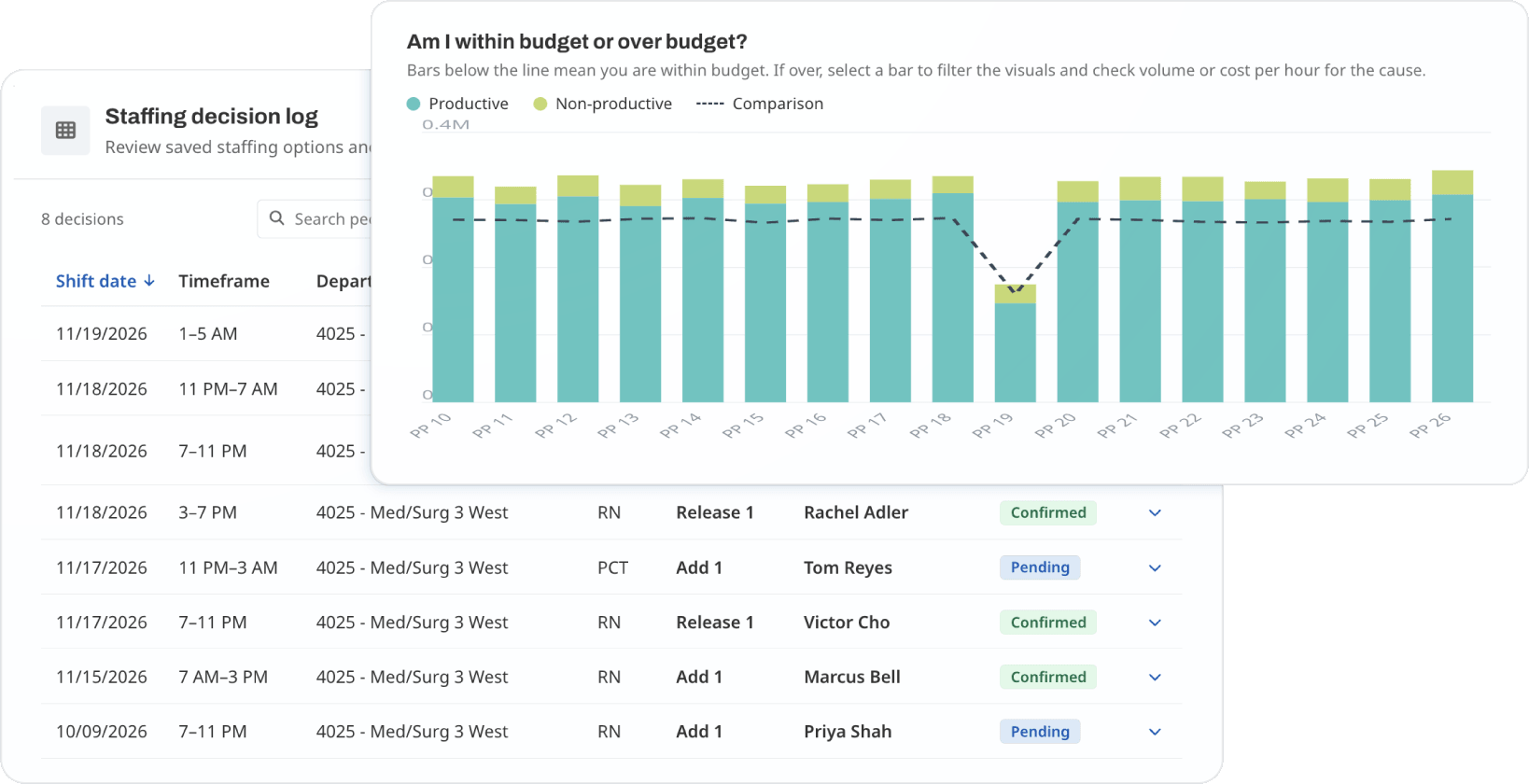

Decision log tracks whether the recommended change actually landed.
Dashboard highlights
Natural Language Query
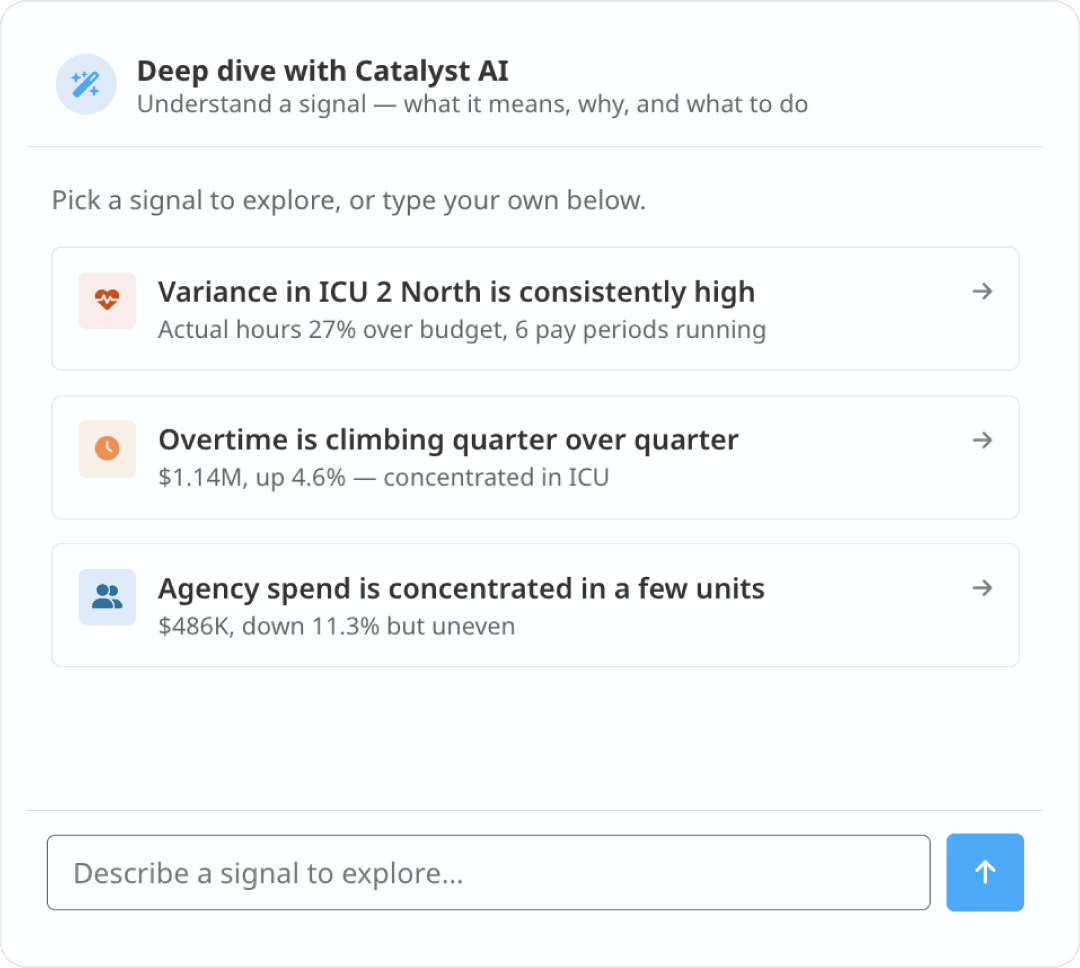
Ask it a plain question, "why is the ICU over budget this week", and get a real answer back. No dashboard to dig through, no analyst, no report to wait on.
It's built on the same data foundation behind every recommendation on this page, so the answer isn't a guess dressed up in confident language. It's something you can actually act on.
INTEGRIS Health
$30M
in labor cost savings
Hawaii Pacific Health
$2.2M
in savings within 16 months
How we work with you
Before go-live, your team gets ready: a sponsor clears the way, an operational lead owns adoption, IT connects the data. After that, we stay in it together: interpreting findings, keeping leadership focused on what matters most, and turning progress into the next move.

You've seen what Labor Intelligence can surface, a staffing gap forming before it costs money, overtime creeping in on a shift nobody flagged, turnover risk building quietly on a unit that looks fine on paper. It pairs your own scheduling, time-and-attendance, and census data with an engine that ranks the lowest-cost fix, and the people who help your team act on it before the shift ends. Tell us where it's tightest, and we'll walk you through what that looks like in your own system.